"The riverfront is not only visited. It is worked, worshipped, maintained and lived every day."

How can we make room for more  people in shaping the future of our cities?


 Research
 Dialogue
 Future
Piloting Futures is an initiative to imagine and build an inclusive, sustainable and accessible future for all of us!
Across Patna, Delhi and Ghaziabad, the project investigates three everyday systems through participatory design and research in the domain of public space, water and waste, revealing the people, behaviours and informal networks that make cities function.
Patna built a 20.5 km road along the Ganga and called it a Marine Drive. The riverfront it runs past was already alive long before it arrived: boatmen, flower sellers, two women who sweep a kilometre of bank, farmers who worship the land the floods keep taking. They hold the river together every day, and the plan never saw them. What they ask for first is to be recognised.
We wanted to know who actually keeps the riverfront alive through the day, and why their work stays invisible to the people who plan it.
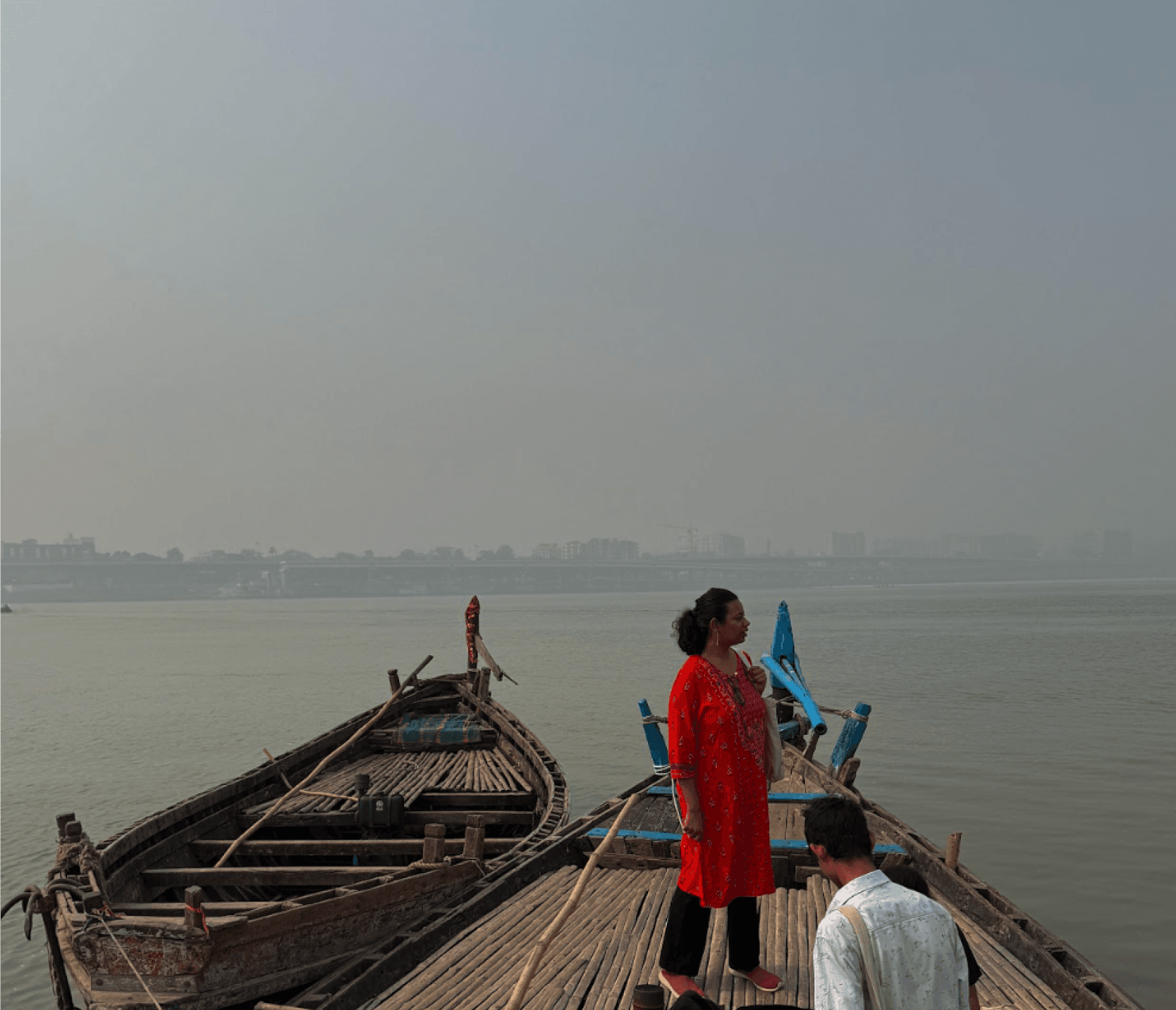
A 20.5 km riverfront road past ghats older than the road itself and still in daily ritual and livelihood use.
The riverfront is already run by the people on it. Before anything is redesigned, the institutions that govern the river have to see and back them, so the ownership and care already there can shape what comes next.






Boatmen & fishermen
Generational trade. The river moved from the steps after construction; hit by trash from the bridge; no formal voice.
Flower & samagri sellers
20 years on the same step, the position is the business. Deep emotion, no acted on response; unlicensed.
Digha Ghat vendors
Pineapple, kala khatta. Govt stalls removed, income collapsed. Run a WhatsApp alert network; no channel back.
Safai karamchari didis
Two women holding a long stretch. Burn trash at the bank (can’t carry it up). ₹9,000/mo; absorb the gap.
Diyara farmers
Family trade; worship the land. Lost land to floods repeatedly; lease ~₹20k; invisible to the road’s planning.
Displaced community
NIT/Anta Ghat. Govt housing, no ownership, constant threat of being moved; intermittent water; no maintenance role.
Child workers
Munna, 15, works the ghat ~6 months/yr instead of school. The present forecloses the next generation.
College students & youth
After class third place. Value the new clean architecture, but pass through and don’t dwell.
Lifelong residents
Belonging through memory. Read the new ghats as ‘cement, devoid of vibrancy’, severance from a formative place.
Student conservationists
Nishant’s group: self funded (₹40 to 200/mo), built an immersion pit, protect heritage trees. Unrecognised.
Governing bodies
BUIDCO (road), Nagar Nigam (licensing), WRD (the edge), BSRCCL, Smart City, police, none on the bank daily.
Ecologists & river experts
Read it as ‘ecology blind planning’: biodiversity loss, flood risk; dolphins, birds, wetlands absent from policy.
Built as a road, not a riverfront
The ghats weren’t in the design brief; vendors aren’t in the operational plan; the Diara wasn’t consulted.
Raised land cut off the water
Construction fill left the bank higher than the river. Lower steps are dry; ritual access broke.
The road became a dividing line
It hardened the north/south split. Schools, colleges, ghats now sit across a 4 lane carriageway.
Recognition gap
Three generations of presence, no recognised route to shape the next phase. Belonging felt, not legible.
The body absorbs the gap
Karamchari didis burn waste at the bank because no infrastructure was built for them.
Income redirected, not shared
Stalls removed, wages stagnant, leases costly. The post Marine Drive economy left primaries worse off.
Standardised shopfronts erase ownership
A frontage with no owner’s mark is harder to treat as theirs. A unit, not a place.
High emotion, low action
People call the river Mai / god / lifecycle, yet report doing nothing. That gap is what to close.
No third space for youth
The development produced a viewing platform. Young people stand a while and leave; nowhere to dwell.
Closes to women after dark
Lighting improved, but not the populated, women chosen evening presence real access needs.
Self organisation unseen
The vendor WhatsApp net, student conservation, informal sport all run with no venue the system recognises.
Decisions made off the bank
Every governing body shapes it from elsewhere. No route by which decisions and daily condition reach each other.
Make the everyday practice visible
The vendor network, the cleaners, the students, the informal sport, the river is already run by people the system cannot see. Making that practice legible to the bodies that govern the bank is itself a design move, and often the most useful one.
Design for the radius someone already holds
The strongest action is one that fits inside a person’s existing routine, on the stretch of bank they already tend, without asking them to organise into something new.
Let the bank keep its own clock
The road runs on a connectivity timetable. The bank runs on ritual, livelihood and the river’s hours. There is an opening to plan each on its own clock, rather than forcing the road’s onto the bank.
Begin from what is already being held
Future phases can start from the ownership and care already on the bank, rather than from the frontage the road would prefer were there.
Give the ritual a clean place to land
People will not stop offering to the river. Giving devotion a clean place to go, as the students did with their immersion pit, does far more than any instruction to stop.
Build a route that runs both ways
The bodies that shape the bank are never on it. There is an opening to create a channel by which their decisions reach the bank, and the bank’s daily condition reaches them, without either side having to go looking for the other.
Give young people a place to stay, and a way in
The development produced a viewing platform people pass through. There is an opening to give youth somewhere to actually dwell, and a recognised route to help shape what the riverfront becomes.
Our research process
start from how people already live, find where the system and everyday life rub against each other, and let the place correct us.
Immerse
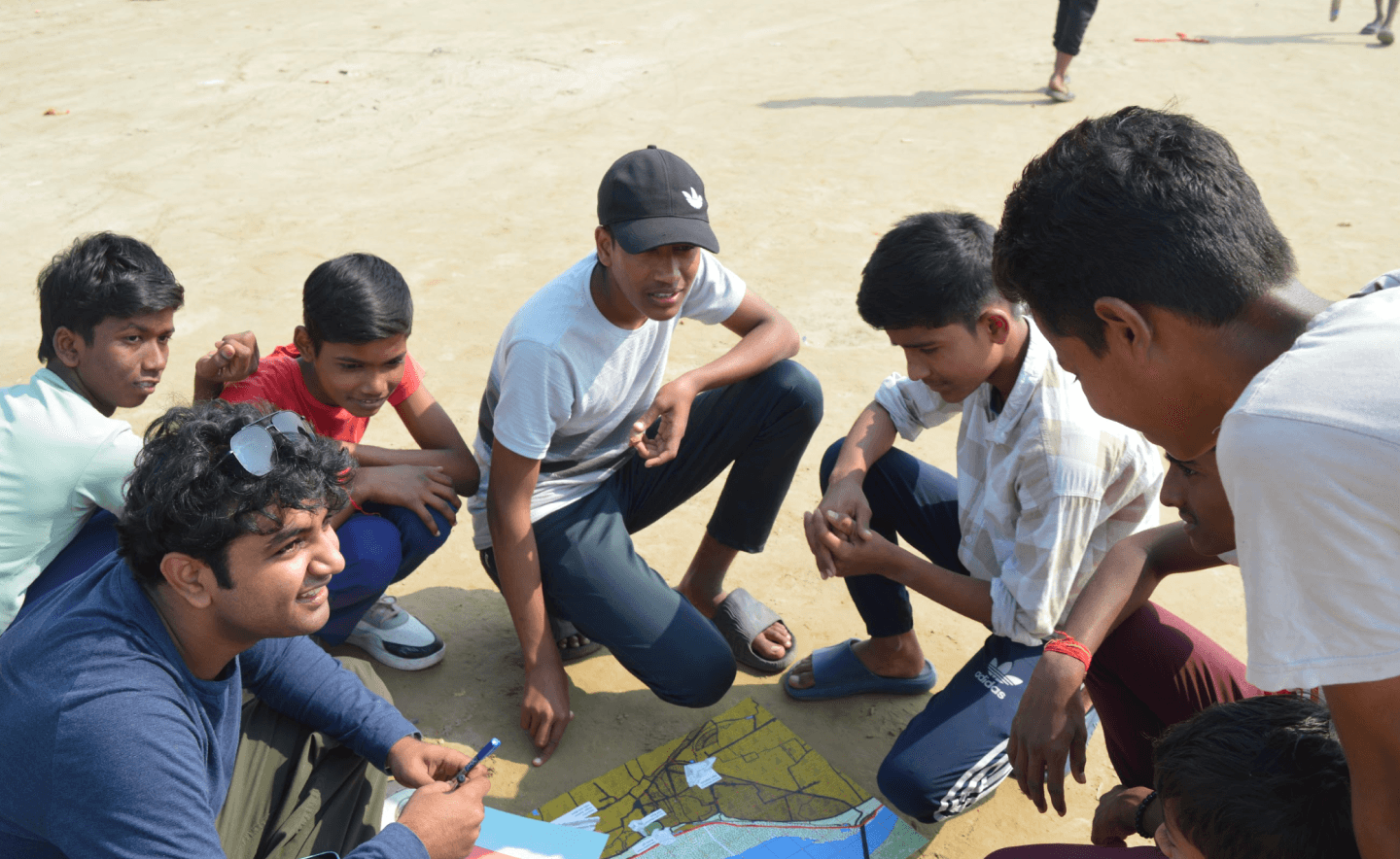
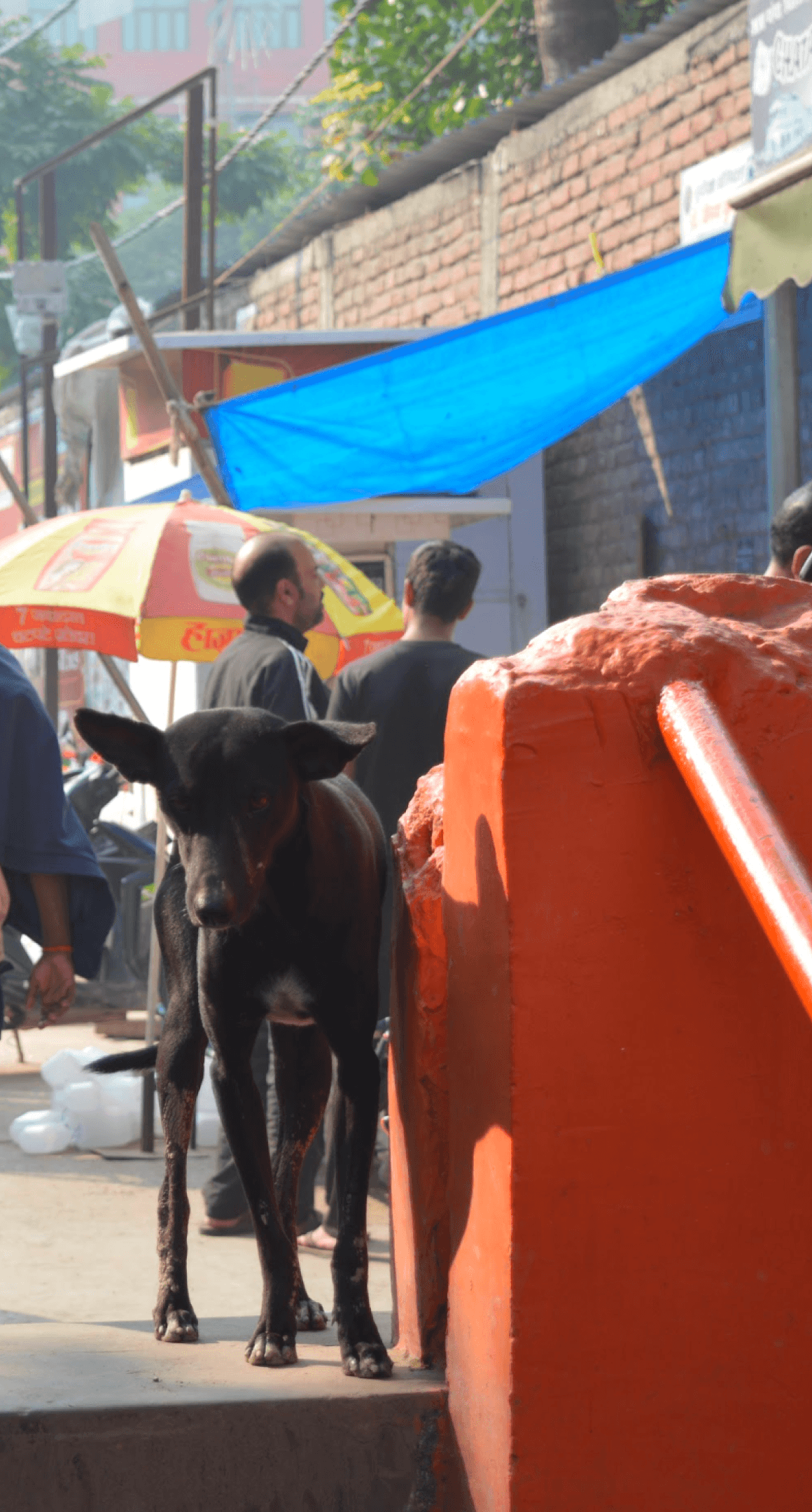
We spend long stretches on the ground, walking the lanes, ghats and markets, talking with the people who hold each system together every day, and watching how they actually use it.
Map the system
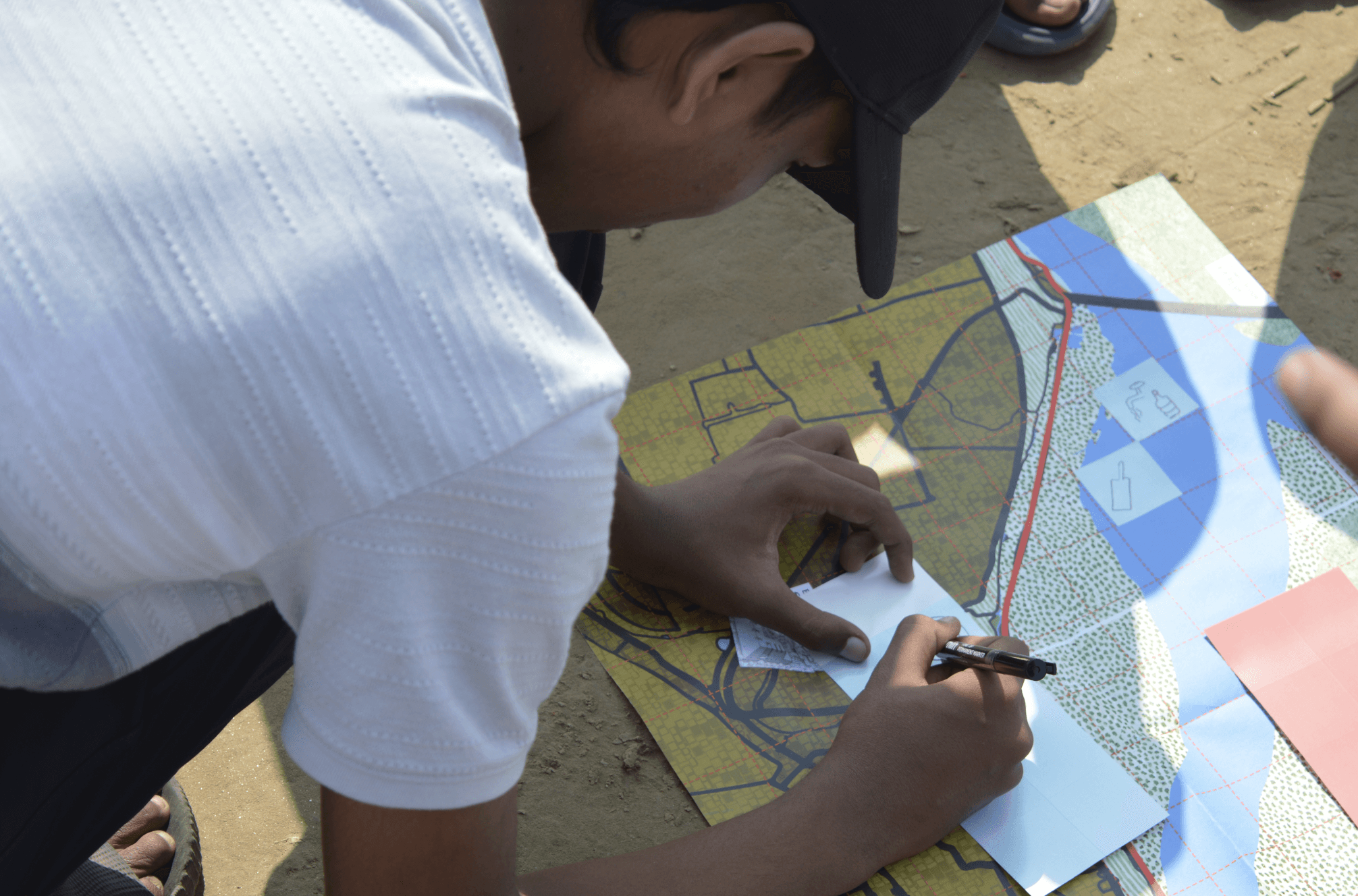
We map everyone the system touches: who acts, who pays, and who quietly absorbs the gap when it falls short.
Synthesise
The field notes turn into patterns. We pull out the real tensions and distil them into a small set of insights anyone can follow.
Frame
Each insight becomes an opportunity: a clear, open brief that points at a change without prescribing the answer.


Research decks
Piloting Futures is an initiative to imagine and build an inclusive, sustainable and accessible future for all of us!
Across Patna, Delhi and Ghaziabad, the project investigates three everyday systems through participatory design and research in the domain of public space, water and waste, revealing the people, behaviours and informal networks that make cities function.
Patna built a 20.5 km road along the Ganga and called it a Marine Drive. The riverfront it runs past was already alive long before it arrived: boatmen, flower sellers, two women who sweep a kilometre of bank, farmers who worship the land the floods keep taking. They hold the river together every day, and the plan never saw them. What they ask for first is to be recognised.
We wanted to know who actually keeps the riverfront alive through the day, and why their work stays invisible to the people who plan it.
A 20.5 km riverfront road past ghats older than the road itself and still in daily ritual and livelihood use.
The riverfront is already run by the people on it. Before anything is redesigned, the institutions that govern the river have to see and back them, so the ownership and care already there can shape what comes next.
Boatmen & fishermen
Generational trade. The river moved from the steps after construction; hit by trash from the bridge; no formal voice.
Flower & samagri sellers
20 years on the same step, the position is the business. Deep emotion, no acted on response; unlicensed.
Digha Ghat vendors
Pineapple, kala khatta. Govt stalls removed, income collapsed. Run a WhatsApp alert network; no channel back.
Safai karamchari didis
Two women holding a long stretch. Burn trash at the bank (can’t carry it up). ₹9,000/mo; absorb the gap.
Diyara farmers
Family trade; worship the land. Lost land to floods repeatedly; lease ~₹20k; invisible to the road’s planning.
Displaced community
NIT/Anta Ghat. Govt housing, no ownership, constant threat of being moved; intermittent water; no maintenance role.
Child workers
Munna, 15, works the ghat ~6 months/yr instead of school. The present forecloses the next generation.
College students & youth
After class third place. Value the new clean architecture, but pass through and don’t dwell.
Lifelong residents
Belonging through memory. Read the new ghats as ‘cement, devoid of vibrancy’, severance from a formative place.
Student conservationists
Nishant’s group: self funded (₹40 to 200/mo), built an immersion pit, protect heritage trees. Unrecognised.
Governing bodies
BUIDCO (road), Nagar Nigam (licensing), WRD (the edge), BSRCCL, Smart City, police, none on the bank daily.
Ecologists & river experts
Read it as ‘ecology blind planning’: biodiversity loss, flood risk; dolphins, birds, wetlands absent from policy.
Built as a road, not a riverfront
The ghats weren’t in the design brief; vendors aren’t in the operational plan; the Diara wasn’t consulted.
Raised land cut off the water
Construction fill left the bank higher than the river. Lower steps are dry; ritual access broke.
The road became a dividing line
It hardened the north/south split. Schools, colleges, ghats now sit across a 4 lane carriageway.
Recognition gap
Three generations of presence, no recognised route to shape the next phase. Belonging felt, not legible.
The body absorbs the gap
Karamchari didis burn waste at the bank because no infrastructure was built for them.
Income redirected, not shared
Stalls removed, wages stagnant, leases costly. The post Marine Drive economy left primaries worse off.
Standardised shopfronts erase ownership
A frontage with no owner’s mark is harder to treat as theirs. A unit, not a place.
High emotion, low action
People call the river Mai / god / lifecycle, yet report doing nothing. That gap is what to close.
No third space for youth
The development produced a viewing platform. Young people stand a while and leave; nowhere to dwell.
Closes to women after dark
Lighting improved, but not the populated, women chosen evening presence real access needs.
Self organisation unseen
The vendor WhatsApp net, student conservation, informal sport all run with no venue the system recognises.
Decisions made off the bank
Every governing body shapes it from elsewhere. No route by which decisions and daily condition reach each other.
Make the everyday practice visible
The vendor network, the cleaners, the students, the informal sport, the river is already run by people the system cannot see. Making that practice legible to the bodies that govern the bank is itself a design move, and often the most useful one.
Design for the radius someone already holds
The strongest action is one that fits inside a person’s existing routine, on the stretch of bank they already tend, without asking them to organise into something new.
Let the bank keep its own clock
The road runs on a connectivity timetable. The bank runs on ritual, livelihood and the river’s hours. There is an opening to plan each on its own clock, rather than forcing the road’s onto the bank.
Begin from what is already being held
Future phases can start from the ownership and care already on the bank, rather than from the frontage the road would prefer were there.
Give the ritual a clean place to land
People will not stop offering to the river. Giving devotion a clean place to go, as the students did with their immersion pit, does far more than any instruction to stop.
Build a route that runs both ways
The bodies that shape the bank are never on it. There is an opening to create a channel by which their decisions reach the bank, and the bank’s daily condition reaches them, without either side having to go looking for the other.
Give young people a place to stay, and a way in
The development produced a viewing platform people pass through. There is an opening to give youth somewhere to actually dwell, and a recognised route to help shape what the riverfront becomes.
Our research process
start from how people already live, find where the system and everyday life rub against each other, and let the place correct us.
Immerse
We spend long stretches on the ground, walking the lanes, ghats and markets, talking with the people who hold each system together every day, and watching how they actually use it.
Map the system
We map everyone the system touches: who acts, who pays, and who quietly absorbs the gap when it falls short.
Synthesise
The field notes turn into patterns. We pull out the real tensions and distil them into a small set of insights anyone can follow.
Frame
Each insight becomes an opportunity: a clear, open brief that points at a change without prescribing the answer.
Research decks
Questions about Piloting Futures, the city pilots, Action 2047 or the downloadable tools? We’re happy to help.